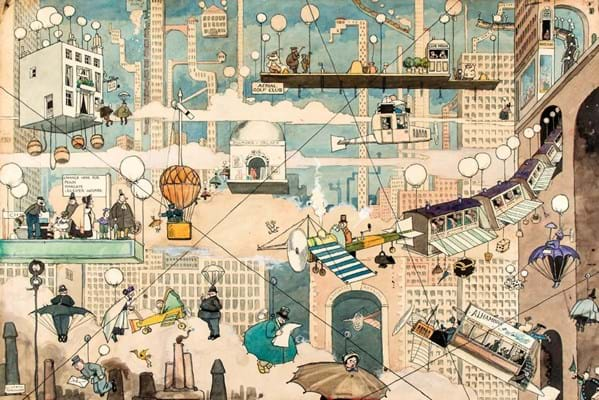


It is well known that William Heath Robinson had originally wanted to establish himself as the romantic landscape artist: “My idea of the life of a landscape painter was to live in the open air and in lonely communion with nature. To be hardened to all weathers, heat, cold, and all climates. To be equally at home in raging storms and under the dazzling sun of the desert.” However, economic realities and a growing family compelled him to focus elsewhere which resulted in him becoming the great humourist and illustrator that he is so famous for.
William’s passion for the art of landscape never left him, and any time the opportunity arose he would incorporate it into these two areas of his work in quite remarkable ways. It is also significant that when time off from his busy schedule permitted, it was the world of Nature that he turned to. He was an avid walker in the countryside, both in the daytime and at night, alone or with his brothers and friends. This communing provided valuable fuel to his powers of observation and imagination. Throughout his life he produced for his own personal interest a fascinating body of land and seascapes involving the desire to experiment with a variety of styles, even at times verging on abstraction, in his continuing concern to fathom the relationship between nature and self. In this way his explorations offer insightful comparisons with those contemporary artists in the current Sublime Space exhibition.
Peter Higginson is Chair of the William Heath Robinson Trust, an art historian, university lecturer, and director of several cultural studies tours abroad. He is also a great-nephew of Heath Robinson.